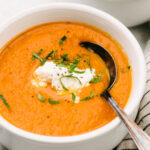
Fresh Tomato Basil Soup
Fresh tomato soup is better than anything you'll find in a can. Use any tomatoes you have on hand, as long as they're ripe and juicy. A great tomato soup has the perfect balance between acidity and sweetness, so don't skip or skimp on the ingredients that get you there - a bit of sugar, kosher salt, and heavy cream. This recipe freezes beautifully, so make a double batch for a taste of summer in the depths of winter.
Servings 4
Calories 240kcal
Equipment
Ingredients
- 1 tablespoon olive oil
- 1 tablespoon butter
- 1 medium Vidalia (sweet) onion diced to ½”
- 2 medium carrots diced to ½”
- 2 stalks celery diced to ½”
- 4 cloves garlic minced
- 2 tablespoon balsamic vinegar
- 3 pounds ripe tomatoes cored and chopped, see Note 1
- 1 teaspoon sugar optional, see Note 2
- 1.5 teaspoon kosher salt see Note 3
- 1 teaspoon dried basil
- ½ teaspoon dried oregano
- 2 cups low sodium broth chicken or vegetable
- ¼ c fresh julienned basil plus more for serving
- ½ c heavy cream optional
- ricotta cheese for serving
Instructions
- Heat a dutch oven over medium heat; add the oil and butter and heat until the butter melts then foams. Add onion, carrots, celery and toss to coat in the fat. Saute, stirring occasionally, until the vegetables soften and start to brown in spots, 8-10 minutes. Add the garlic and saute, stirring constantly, for 1 minute more.
- Pour in the balsamic vinegar; stir and scrape the bottom of the pot until the vinegar stops bubbling. Cook an additional 2-5 minutes, until the vinegar has been reduced and/or mostly absorbed; you shouldn't see any vinegar pooling on the bottom of the pot; see Note 4.
- Add the tomatoes, sugar (if using), salt, dried basil, dried oregano, and broth. Stir the pot contents until well combined.
- Increase the heat to high and bring the liquid to a boil. Reduce to medium low to maintain a gentle simmer. Partially cover (see Note 5) with the lid cracked and simmer at least 30 minutes, and up to 1 hour, until the vegetables are very soft and the tomatoes are deep red.
- Add the fresh basil and heavy cream, then puree using an immersion blender until smooth. Taste for seasoning and adjust the salt or sugar to taste.
- Portion into bowls and serve with a dollop of ricotta cheese and more fresh basil. Enjoy!
Video
Notes
Note 1. Use any tomatoes that you have on hand or can easily purchase, as long as they're ripe and juicy! This recipe is perfect for affordable tomatoes, like "seconds" from the farmer's market or any vine tomatoes that happen to be on sale. Do remove the cores, but there's no need to remove the seeds.
Note 2. Sugar balances acidity, and tomatoes are quite acidic. Just a teaspoon helps without making the soup overly sweet.
Note 3. Salt enhances the flavor of tomatoes. If you're sensitive to sodium, start with ¾ teaspoon and add more when you taste for seasoning in the last step.
Note 4. Balsamic vinegar will sweeten as it reduces, so it's important to allow it to fully cook down and absorb before proceeding.
Note 5. Tomatoes have a very high water content that will release as the soup simmers. Partially cover to trap in the majority of the moisture while allowing a bit to evaporate; this prevents you from having a watery soup. If too much moisture has evaporated, you can always add a bit more broth after pureeing.
Storing and Reheating
- In the fridge: leftover tomato soup will keep for up to 5 days in a sealed container in the fridge.
- In the freezer: typically cream soups do not store well as the dairy separates after defrosting. However, with only half a cup of heavy cream, this tomato soup freezes beautifully! Store in an air-tight container in the freezer for up to 4 months. Place in the fridge overnight to defrost, and reheat as directed.
- Reheating: simmer in a pot over medium heat until the tomato basil soup starts to bubble around the edges; reheat single portions in the microwave in 45-second increments, stirring in-between, until warm.
Nutrition
Serving: 2cups | Calories: 240kcal | Carbohydrates: 25g | Protein: 5g | Fat: 15g | Saturated Fat: 9g | Polyunsaturated Fat: 1g | Monounsaturated Fat: 3g | Trans Fat: 0g | Cholesterol: 41mg | Sodium: 856mg | Potassium: 1063mg | Fiber: 6g | Sugar: 14g | Vitamin A: 353% | Vitamin C: 84% | Calcium: 10% | Iron: 8%